
USCIS ended H-1B deference in Oct. 2017
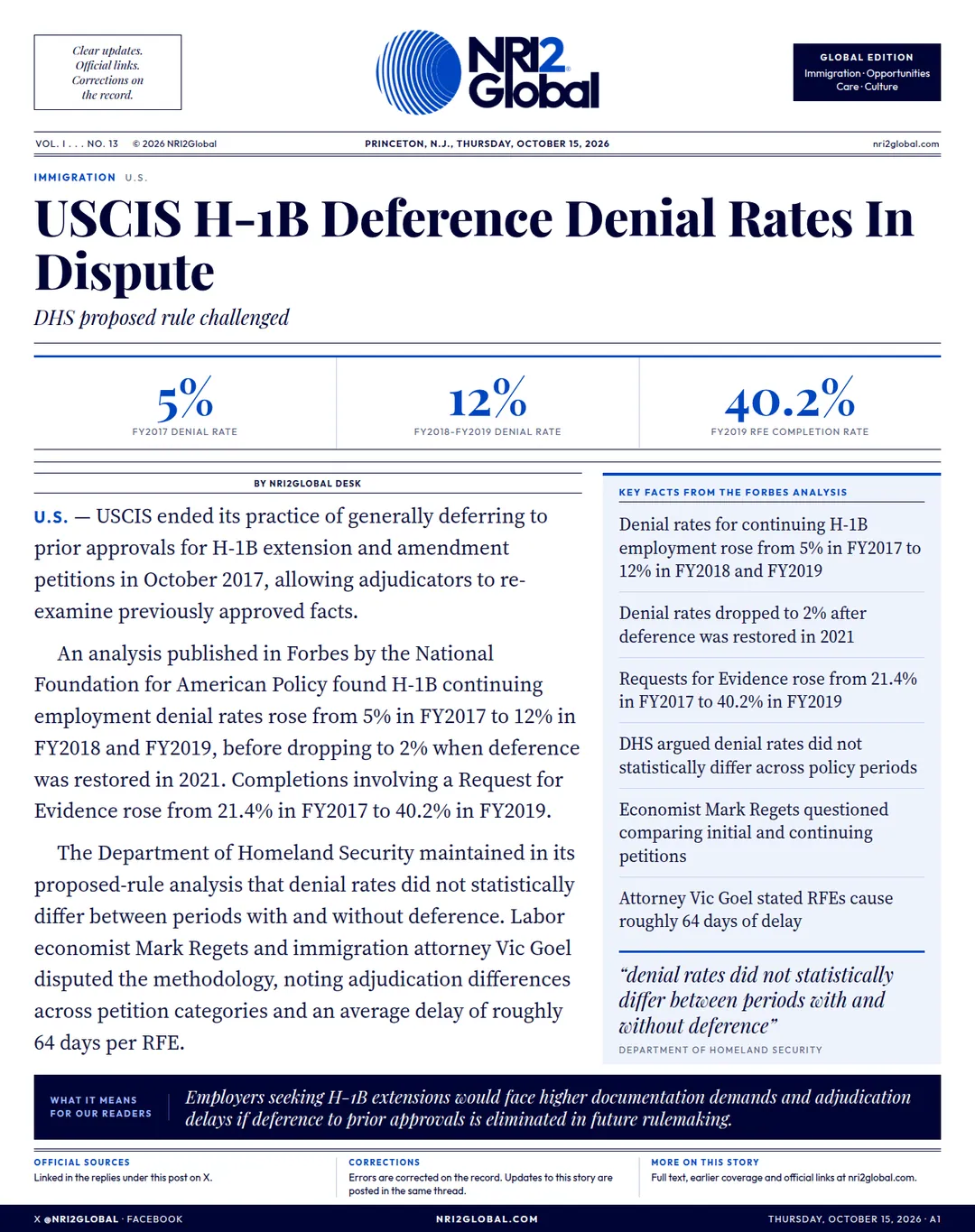
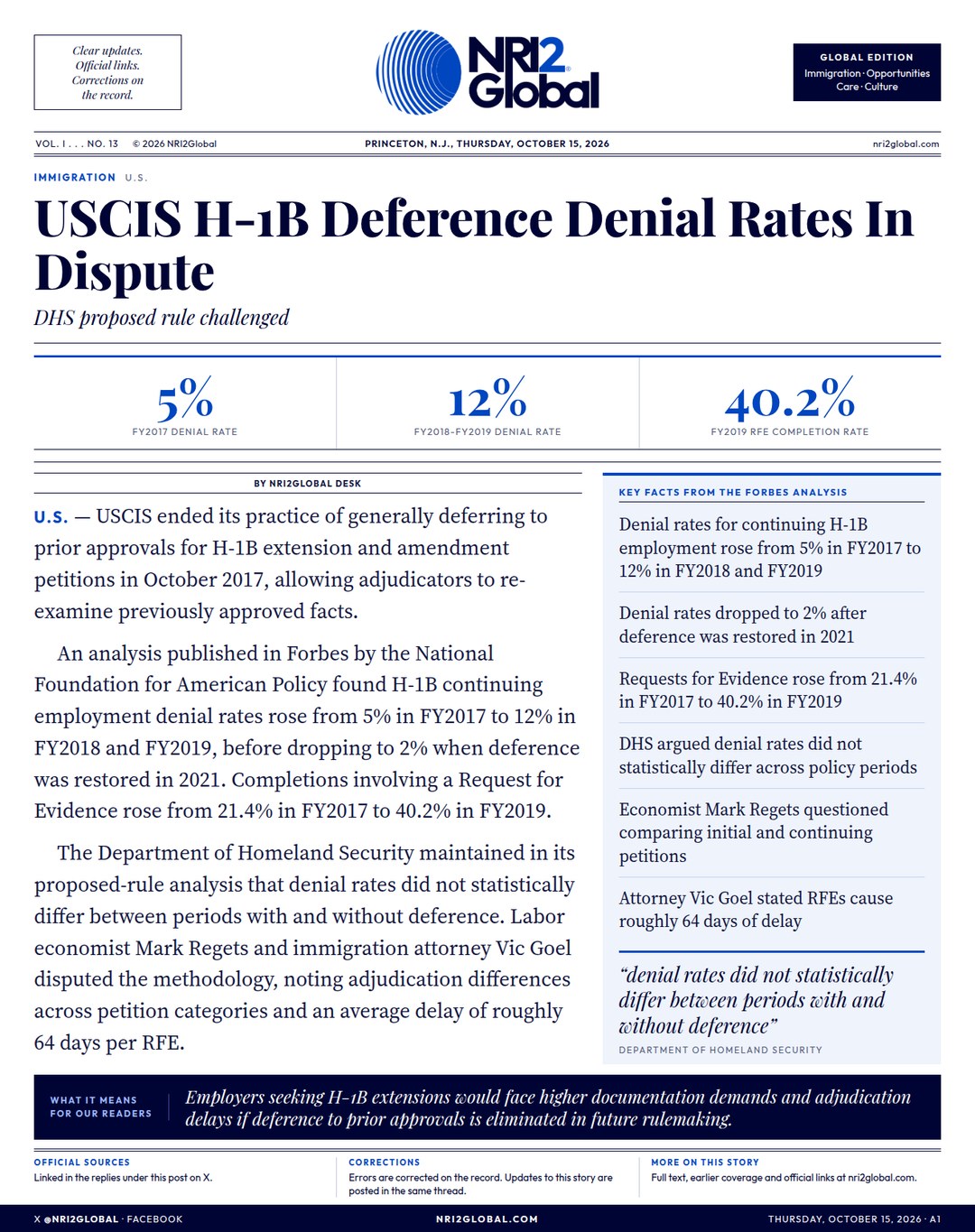
USCIS data analyzed by NFAP show H-1B continuing employment denial rates rose from 5% in FY2017 to 12% in FY2018 and FY2019 after the agency ended deference to prior approvals in October 2017, according to an analysis published in Forbes.
The findings apply to employers and H-1B specialty occupation workers seeking extensions or amendments for continuing employment.
National Foundation for American Policy (NFAP) data showed denial rates fell to 2% after deference was restored in 2021, while H-1B completion requests for evidence rose from 21.4% in FY2017 to 40.2% in FY2019.
Department of Homeland Security (DHS) argued in its proposed-rule analysis that denial rates did not statistically differ between periods with and without deference.
The article criticizes DHS's proposed rule for failing to cite publicly available USCIS denial and RFE figures.
Labor economist Mark Regets stated DHS's comparison may be flawed because initial and continuing petitions follow different adjudication standards, while immigration attorney Vic Goel estimated an RFE adds roughly 64 days of delay.
If deference is removed again, employers may need to fully document jobs, wages, worksites, and qualifications, file early, consider premium processing, and avoid international travel while an extension is pending without legal guidance.
Employers seeking H-1B extensions would face higher documentation demands and adjudication delays if deference to prior approvals is eliminated in future rulemaking.